
Missing a tooth can affect much more than the appearance of your smile. It can change how you chew, influence your speech, and even affect the position of neighboring teeth. Fortunately, modern dentistry provides several dependable ways to replace missing teeth. Two popular options are dental implants and dental bridges. But how do you decide which solution makes the most sense for your needs?
Understanding dental implants vs. bridges is an important starting point. Both treatments can restore your smile, although they work differently and offer distinct advantages. At Red River Dental, our team helps patients explore personalized dental implant options in East Grand Forks while considering their long-term oral health, comfort, and treatment preferences.
Understanding Dental Implants vs. Bridges
Dental implants and bridges replace missing teeth, but their methods of support are different. A dental implant replaces a missing tooth root with a small post placed into the jawbone. After healing, a custom restoration is attached to provide a functional replacement tooth.
A traditional dental bridge, meanwhile, fills the space left by a missing tooth using an artificial tooth supported by neighboring natural teeth. These supporting teeth generally require preparation so that crowns can fit over them.
Both solutions can look natural and improve everyday activities. However, the right choice depends on factors such as bone health, the condition of surrounding teeth, the number of missing teeth, and personal treatment priorities.
Because every smile is different, comparing dental implants vs. bridges requires more than simply looking at the initial price. Long-term maintenance, treatment time, and the health of adjacent teeth also deserve consideration.
How Dental Implants Replace Missing Teeth
Dental implants are designed to provide an independent foundation for replacement teeth. During treatment, an implant is placed into the jawbone, where it can gradually integrate with the surrounding bone. This process, called osseointegration, helps create a stable base for the final restoration.
Once the implant has healed sufficiently, a connecting component and custom crown can complete the replacement. In other situations, multiple implants may support a bridge or denture.
One important advantage is that a single implant generally does not require the neighboring teeth to be reshaped. Therefore, it can be particularly appealing when the surrounding teeth are healthy.
Implants also transfer chewing forces into the jawbone. This stimulation helps limit the bone changes that commonly occur after tooth loss, although it does not eliminate every possibility of bone loss.
Not everyone is automatically a candidate. The dentist will need to evaluate gum health, available bone, medical history, and other considerations before recommending treatment. Some patients may require additional procedures to prepare the site.
How Dental Bridges Restore Your Smile
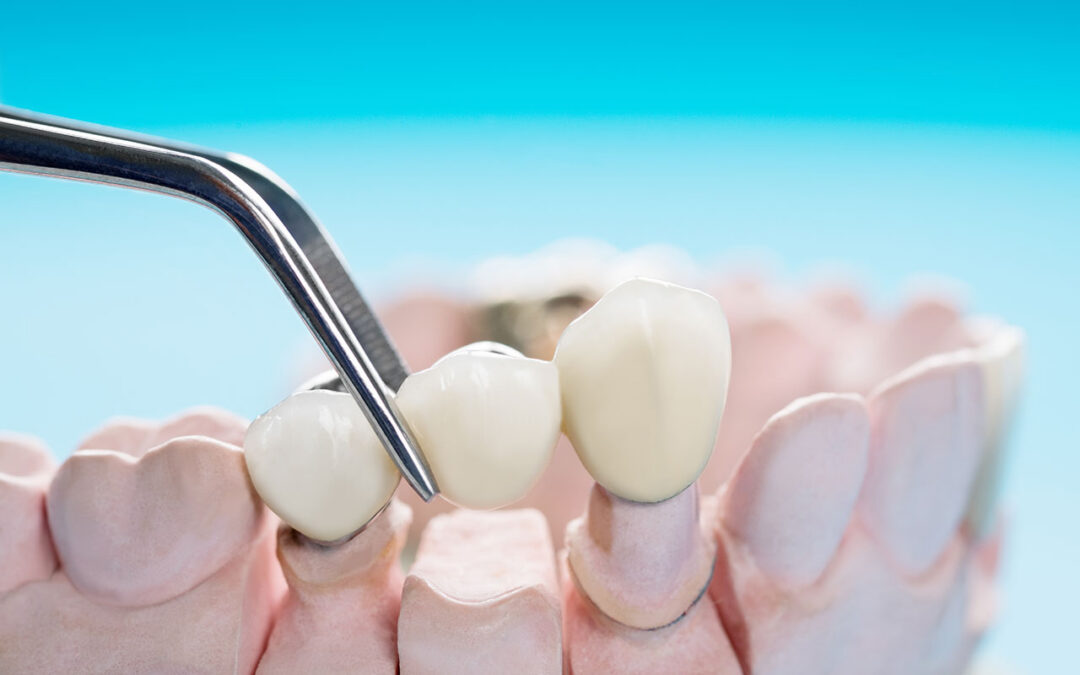
A traditional dental bridge connects an artificial tooth, called a pontic, to crowns placed on teeth beside the empty space. Together, these components form a single restoration that fills the gap.
Dental bridges can be particularly useful when neighboring teeth already need crowns because of extensive damage or existing restorations. In these cases, the bridge may address several restorative needs at once.
Unlike dental implants, conventional bridges do not require surgical placement into the jaw. Treatment may also be completed more quickly, depending on the individual situation and the restoration being made.
However, supporting teeth must be strong enough to withstand additional chewing forces. Traditional bridges also usually require removing some tooth structure from the adjacent teeth.
For this reason, patients comparing dental implants vs. bridges should understand how each option affects the surrounding teeth. The best approach protects both the missing-tooth area and the overall health of the mouth.
Benefits of Dental Implants vs. Bridges
Both options offer meaningful improvements over leaving a missing-tooth space untreated. Their advantages become clearer when compared side by side.
Benefits of Dental Implants
- Independent support: A single implant usually does not rely on neighboring teeth.
- Jawbone stimulation: Implants help preserve bone by transmitting chewing forces into the jaw.
- Natural function: Well-restored implants can provide stable support during chewing and speaking.
- Long-term potential: With appropriate care, implants can remain functional for many years.
- Versatile treatment: Implants can support individual crowns, bridges, or certain types of dentures.
Benefits of Dental Bridges
- No implant surgery: Traditional bridges can replace teeth without placing a post into the jaw.
- Shorter treatment timeline: Treatment commonly requires less healing time than implant placement.
- Restored chewing: A properly fitted bridge can help patients eat more comfortably.
- Natural appearance: Custom restorations can blend with surrounding teeth.
- Useful for existing dental needs: Bridges may be practical when adjacent teeth already require crowns.
Neither treatment is universally better. Instead, the ideal restoration depends on the condition of the remaining teeth, oral health goals, and individual circumstances.
Which Option Lasts Longer?
Longevity is often a major consideration when comparing dental implants vs. bridges. Dental implants can provide long-lasting support when surrounding tissues remain healthy. However, the visible implant crown may eventually require repair or replacement because of normal wear.
Dental bridges can also last for many years with consistent care. Their durability depends partly on the condition of the supporting teeth, the fit of the restoration, and the patient’s daily cleaning habits.
For both treatments, brushing, cleaning between teeth, attending dental examinations, and avoiding excessive biting forces are important. Conditions such as gum disease, untreated decay, or teeth grinding can shorten the lifespan of restorations.
Importantly, no restoration should be considered completely maintenance-free. Routine dental visits allow the dentist to evaluate its condition and address small issues before they become more complicated.
Comparing Treatment Costs and Long-Term Value
The initial cost of a dental bridge is often lower than that of a dental implant. However, an upfront estimate does not tell the whole story.
Implant treatment may involve imaging, surgical placement, additional healing time, and a custom restoration. A bridge typically involves preparing supporting teeth, taking impressions or scans, and placing the finished restoration.
Over time, either option may require maintenance or replacement. For example, a bridge might need attention if decay develops around a supporting tooth. An implant crown could also require replacement because of wear or damage.
Dental insurance coverage varies considerably. Some plans contribute toward bridges, implant crowns, or other treatment components, while others have restrictions or waiting periods.
At Red River Dental, patients can discuss their treatment plan and available payment arrangements before moving forward. Understanding the expected costs and maintenance responsibilities can make the decision more manageable.
What About Comfort and Recovery?
Comfort matters throughout the tooth replacement process. With dental implants, the placement procedure is generally performed using local anesthesia. Temporary swelling, tenderness, or mild discomfort may occur afterward, and healing varies by patient.
Bridges do not involve implant placement surgery. However, preparing the supporting teeth may cause temporary sensitivity, and patients sometimes need a short adjustment period with their new restoration.
Once healing and fitting are complete, both options should support comfortable everyday function. If a restoration causes persistent discomfort, feels loose, or interferes with the bite, the dentist should evaluate it.
Patients who feel nervous about treatment should mention their concerns early. Red River Dental emphasizes personalized care and offers comfort-focused amenities to help patients feel more at ease during visits.
How Missing Teeth Affect Your Remaining Smile
Replacing a missing tooth is not necessarily just a cosmetic decision. Depending on the location of the gap, neighboring teeth may gradually tilt or shift into the available space.
Tooth loss can also change the way chewing forces are distributed. Some patients begin favoring one side of their mouth, which may place additional strain on other teeth.
Meanwhile, the jawbone beneath a missing tooth can lose volume over time because it no longer receives the same stimulation from a natural tooth root.
These changes do not happen identically for everyone. Nevertheless, addressing missing teeth before complications develop may make future treatment easier.
If you are uncertain whether replacement is necessary, a comprehensive examination can help clarify the likely consequences of maintaining the gap.
How to Decide Between Dental Implants and Bridges
A personalized consultation provides the clearest way to determine which restoration is appropriate. Your dentist will examine your teeth and gums, review your medical history, and evaluate the available support for each option.
Dental imaging may be recommended to assess bone volume, neighboring tooth roots, and the position of important anatomical structures.
During your appointment, consider discussing how long treatment might take, whether adjacent teeth need repairs, the expected maintenance requirements, and any anticipated additional procedures.
Patients who need to replace several teeth may also benefit from learning about restorative dentistry services, including dentures and implant-supported solutions.
Ultimately, choosing between dental implants vs. bridges should feel like an informed decision rather than a rushed one. Understanding your options allows you to prioritize what matters most.
Frequently Asked Questions About Dental Implants vs. Bridges
Are dental implants better than bridges?
Dental implants may be preferable when neighboring teeth are healthy and adequate jawbone is available. Bridges may be more suitable when adjacent teeth need crowns or when implant surgery is not recommended. An examination helps determine the best approach.
Can a dental bridge be replaced with an implant?
In some cases, yes. The dentist must evaluate the condition of the surrounding teeth, gums, and jawbone before determining whether an implant can replace an existing bridge.
Do dental implants require special cleaning?
Implants require daily brushing, careful cleaning around the restoration, and regular professional examinations. Your dental team may recommend specific brushes or flossing tools based on the restoration design.
How long does dental implant treatment take?
Implant treatment commonly takes several months because the implant needs time to integrate with the jawbone. The exact schedule depends on healing, treatment complexity, and whether additional procedures are necessary.
Can I get a bridge if I have more than one missing tooth?
Possibly. Some bridges replace multiple teeth, but the supporting teeth must be able to handle the additional forces. Implant-supported bridges or dentures may be better choices for larger gaps.
Find the Right Tooth Replacement Solution in East Grand Forks
Dental implants and bridges can both improve comfort, function, and the health of your smile. The most important consideration is choosing a treatment that fits your individual needs and provides dependable support over time.
Ready to explore your tooth replacement options? Schedule a Consultation with Red River Dental in East Grand Forks, MN, by calling (218) 773-3004 or visiting our contact page.